Why Smart Markets Are Replacing Traditional Vending Machines in Colorado
Smart markets are quietly replacing traditional vending machines across Denver, Boulder, Thornton, and the Front Range. Here's what's driving the shift — and why Colorado spaces are upgrading.
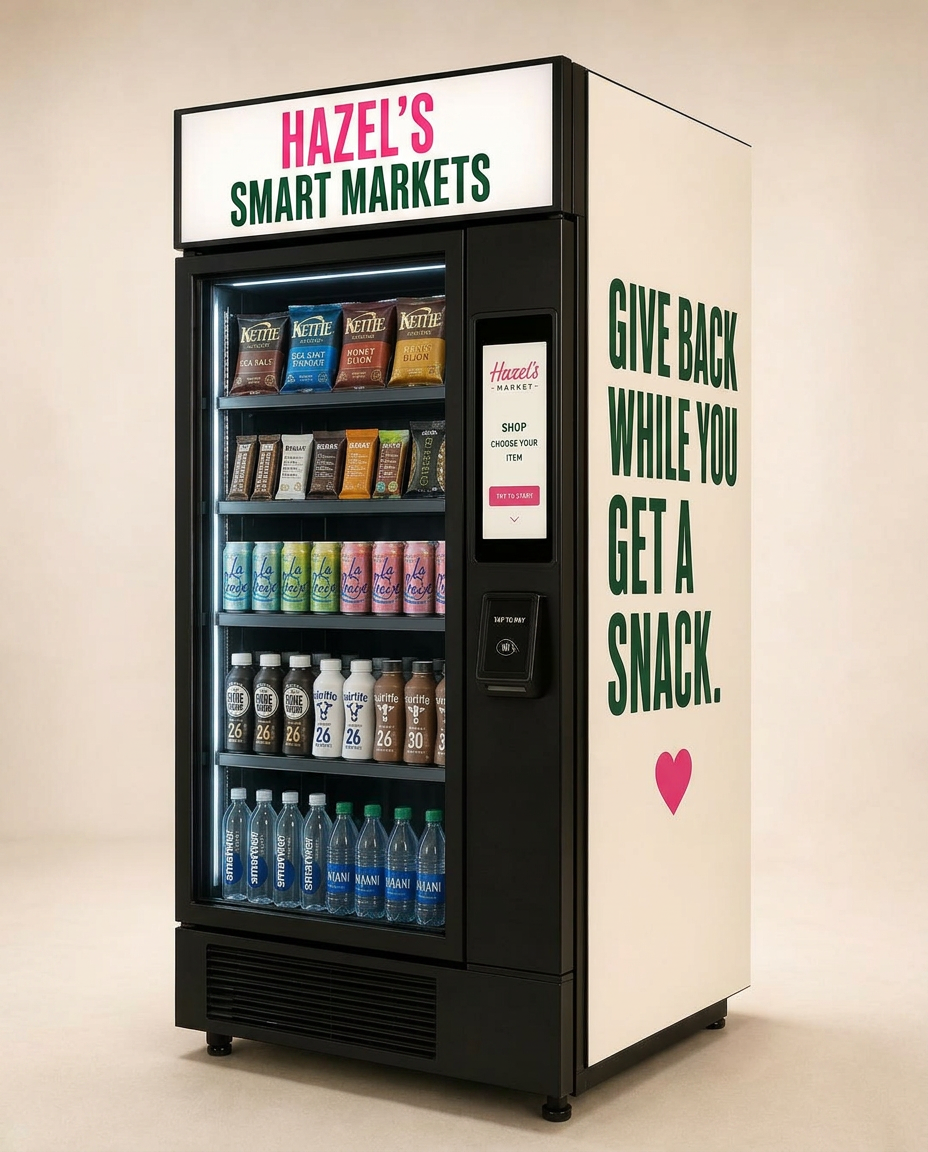
For decades, the vending machine sat in the same hallway, in the same beige finish, with roughly the same five-row grid of snacks behind a sheet of scratched plastic. It was a fixture of American workplaces, apartment lobbies, and waiting rooms — useful in a pinch, but rarely something anyone would describe as a real amenity.
That era is ending. Across Denver, Thornton, Westminster, Broomfield, Boulder, Erie, Lafayette, Longmont, Louisville, Northglenn, Arvada, and Centennial, property teams and operations leaders are quietly retiring those legacy machines and replacing them with something fundamentally different: the smart market.
What a smart market actually is
A smart market is an unattended retail experience built around a hospitality-grade glass-front cooler (or a small cluster of coolers and shelves) with cashless tap-to-pay, real-time inventory monitoring, and a curated assortment selected for the specific community using it.
Where a vending machine drops a product down a chute, a smart market lets you open the door, pick what you actually want, and walk away while the system charges you automatically. The experience feels closer to a well-run café grab-and-go than to the coin-operated relics most of us grew up with.
The three shifts that made this possible
Three quiet shifts converged to make smart markets viable at scale. First, payment expectations changed — almost no one carries cash, and the friction of fishing out crumpled bills became a deal breaker. Second, product expectations changed — people want Celsius, Poppi, RXBAR, Liquid Death, fresh fruit, real protein, and clean-label snacks, not the same shelf of high-sugar candy. Third, software matured — connected coolers can now report their own inventory, temperature, and sales in real time, so operators can restock proactively instead of reactively.
Why Colorado is leading the shift
Colorado is one of the most active markets in the country for premium amenity upgrades. Multifamily developers in Denver and Westminster are competing on resident experience. Healthcare networks in Thornton and Longmont are upgrading staff and visitor amenities. Modern offices in Boulder, Louisville, and Lafayette have raised the bar on what it means to come into work. Fitness studios in Arvada and Erie are investing in hydration and recovery spaces.
All of those operators have arrived at the same conclusion at roughly the same time: the legacy vending machine in the corner is no longer good enough. It signals the wrong thing about the space, frustrates the people using it, and quietly costs goodwill every time it eats a dollar or runs out of the one drink someone wanted.
The hidden cost of the old model
The most overlooked problem with traditional vending isn't the hardware — it's the operating model. Coin-and-bill machines were designed to be visited rarely. Routes are optimized around minimizing service trips, not around keeping the machine well-stocked or aligned with what the community actually buys. The result is the familiar experience of staring at three sold-out coils and a row of products no one wants.
A smart market inverts that. Because the cooler reports inventory live, the operator restocks based on real demand. Because payment is cashless, there's no coin jam and no lost sale. And because the assortment is curated for the location, the products on the shelf actually match the people walking past it.
What property teams notice first
Property teams in Denver Metro tell us the difference is visible on the leasing tour, the staff walk-through, or the patient visit. A polished glass-front cooler with branded merchandising and modern products signals the same thing a thoughtful lobby or a refreshed gym signals: this space cares about the people in it.
The operational difference matters too. There's no cash to handle, no machine to babysit, no awkward refund requests at the leasing desk. The amenity quietly runs in the background while the property team focuses on everything else.
How smart markets fit into community spaces
The smart market category isn't a single product — it's a flexible model that adapts to the space. In a healthcare clinic, that might mean a single cooler stocked with hydration, lighter snacks, and protein options for night shifts. In a Boulder apartment community, it might mean a curated lounge market with grab-and-go meals, functional drinks, and cleaner snacks. In a fitness studio in Lafayette, it might mean a hydration-and-recovery focused cooler near the front desk.
What ties them together is the operating philosophy: hospitality-grade hardware, curated products, cashless convenience, and live monitoring — installed and managed at no cost to the property.
Hazel's Smart Markets — built locally, on purpose
Hazel's Smart Markets is a Colorado-owned operator built specifically for this category. Every market we install is fully managed — we handle the hardware, the merchandising, the restocking, the service, and the technology. Property teams get a premium amenity and zero operational lift.
We're also a community-focused company. A portion of every smart market we operate goes back into local Colorado causes through our give-back model — because convenience should mean something more than a transaction. When residents, patients, members, and staff use a Hazel's market, they're quietly contributing to the community around them.
If you're curious how a smart market would actually fit your space, you can request a location or read more about the rise of cashless smart vending across Colorado.
A quiet but durable shift
Industries don't usually get reinvented overnight, and unattended retail isn't an exception. But the trajectory is clear. The next decade of breakroom, lobby, clubhouse, and waiting-room convenience will be built around smart markets — not the coin-operated boxes most spaces still tolerate. Colorado is one of the places that shift is happening fastest, and the spaces upgrading first are the ones their residents, patients, members, and employees notice the most.
Frequently Asked Questions
- What's the difference between a smart market and a vending machine?
- A smart market uses a glass-front cooler (or a small cluster of coolers and shelves) where you open the door, pick the products you want, and tap to pay — no chute, no coils, no cash. The assortment is curated for the location, inventory is monitored live, and service is managed by a local operator instead of a once-in-a-while route truck.
- Does a smart market cost anything to install?
- Hazel's Smart Markets installs and manages every market at no cost to the property. We provide the hardware, the products, the restocking, the technology, and the ongoing service. The property simply provides the space and a power outlet.
- Where does Hazel's Smart Markets operate in Colorado?
- We serve Denver Metro and the broader Front Range, including Denver, Thornton, Westminster, Broomfield, Boulder, Erie, Lafayette, Longmont, Louisville, Northglenn, Arvada, and Centennial.
Hazel’s Smart Markets
Bring a smart market to your Colorado space.
We partner with healthcare offices, apartment communities, fitness studios, and modern workplaces across Denver Metro and the Front Range — fully managed, fully cashless, and community-focused by design.
Request a Location