How Smart Markets Improve Employee Satisfaction in the Workplace
An honest look at how a well-run smart market or smart cooler measurably improves workplace experience, from break-room quality to retention conversations.
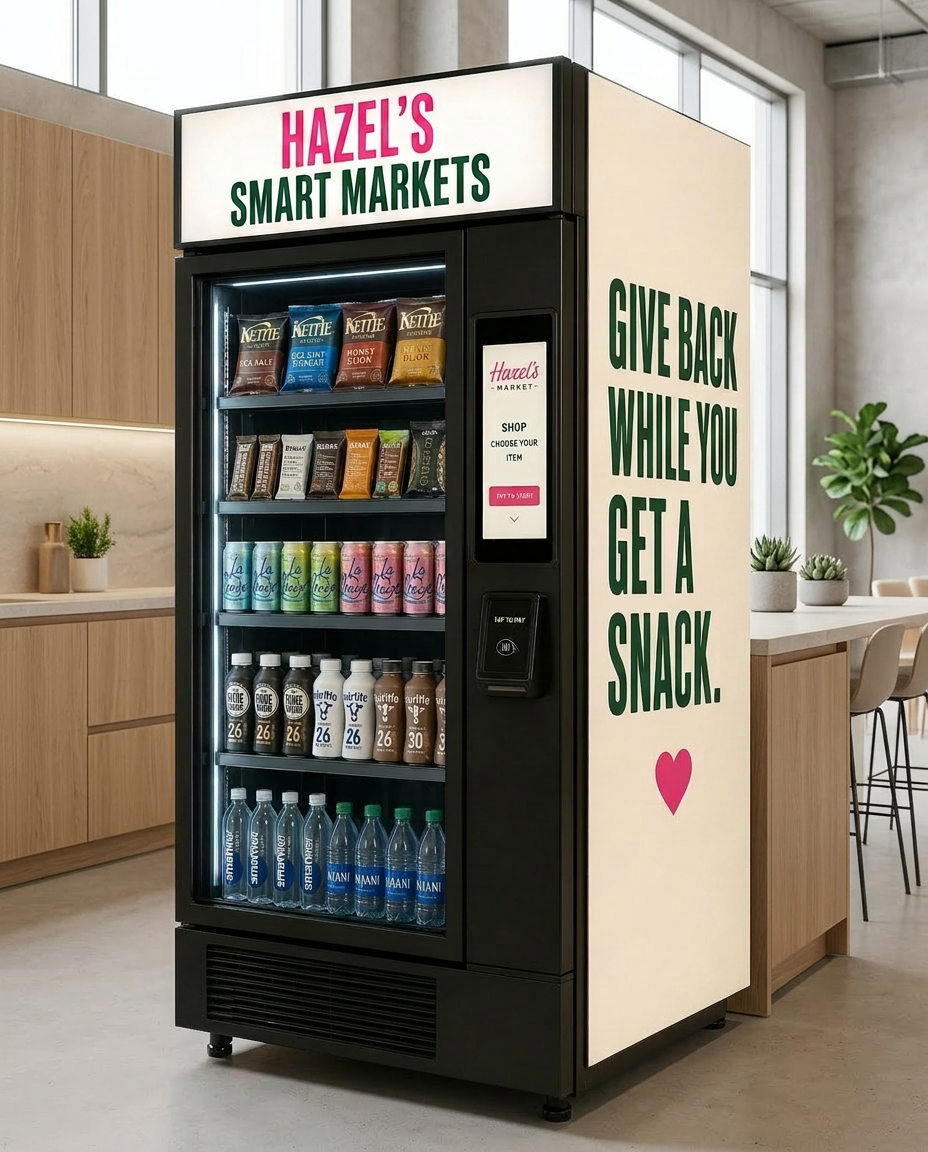
Most workplace amenities are pitched as morale boosters and quietly used as bargaining chips in retention conversations. The smart market is unusual because it actually moves both numbers — daily satisfaction and the harder-to-measure "this place pays attention" feeling — without trying very hard.
Here is the honest version of why, drawn from operating workplace locations across Denver, Boulder, Centennial, Longmont, and the rest of the Front Range.
Why the breakroom is not a small thing
An average employee in a Denver office walks past the breakroom 8 to 14 times a day. They use it for coffee, lunch, snack breaks, water refills, hallway conversations, and small mental resets between meetings.
It is one of the highest-frequency touchpoints in the entire employee experience. A bad breakroom is not just an aesthetic problem — it is a daily small disappointment, repeated.
A well-run smart market changes the math in the other direction.
What changes when you upgrade the breakroom
Across the workplace locations we operate, three patterns show up reliably after a smart market launches.
1. People stay in the building during the day
Without a real on-site option, employees spend $10 to $18 a day on coffee runs, lunch deliveries, and convenience-store stops. With a curated smart market, a meaningful share of those trips collapse back into the building.
That matters in two directions. Employees save money. The company gets more focused work hours and quieter handoffs.
2. Hybrid in-office days feel better
For hybrid teams, the days in the office are the days the company is competing for. A modern breakroom is one of the small reasons people show up willingly on Wednesdays — and one of the reasons they linger to talk to colleagues instead of dashing out.
3. Recruiting tours convert better
On a candidate tour, the breakroom is one of the four or five rooms a serious candidate evaluates. A well-merchandised cooler with real food and modern drinks signals operational maturity in a way no PowerPoint slide can.
What a satisfaction-driving smart market actually looks like
Not every smart market upgrade improves satisfaction. The ones that do tend to share a few traits.
Real food, not just snacks
A breakroom that solves lunch is fundamentally different from one that solves the 3 p.m. craving. The most satisfaction-positive locations carry wraps, salads, parfaits, and grab-and-go meals alongside the snack and drink lineup.
Modern drinks people actually want
Sparkling waters, electrolyte drinks, cold brew, kombucha, functional beverages. A breakroom that still treats Coke and Pepsi as the entire beverage strategy in 2026 reads as out of touch.
Tap-to-pay by default
Friction at checkout undoes the rest of the work. Apple Pay, Google Pay, and tap cards have to work on the first try, every time.
Visible local touches
Featuring a Colorado brand or two — a local snack maker, a Front Range coffee roaster, a local kombucha — quietly signals that the breakroom is connected to the city the team works in.
Reliable restocking
A smart market that runs out of the popular items and stays out for days erodes trust faster than no upgrade at all.
A realistic Wednesday in a Denver office, before and after
**Before:** A 110-person hybrid team in LoDo. Breakroom is a vending machine, a Keurig, and a fridge with three half-empty seltzers. Lunch is DoorDash for most of the team, two to three coffee runs per person per day, and a lot of foot traffic in and out of the building.
**After:** Same breakroom footprint. Old vending machine swapped for a managed smart cooler with sparkling waters, cold brew, electrolyte drinks, real lunch options, protein snacks, and a small local section. Better espresso. Same Keurig as backup.
The team's day reorganizes itself. Lunch becomes a 12-minute reset in the breakroom instead of a 35-minute delivery wait. Coffee runs drop. Hallway conversations happen.
Where smart markets fit in the broader employee experience
Smart markets are not a substitute for compensation, leadership, or culture. They are a low-cost, high-frequency amenity that complements all of those.
Where they tend to land in the broader experience stack:
- They are below compensation and growth opportunities in importance
- They are above most one-time perks (annual offsites, swag) in everyday impact
- They are roughly equal in daily impact to good coffee and reliable WiFi
- They are uniquely visible — every visitor, candidate, and client sees them
Comparison: workplace snack solutions
- **Old vending machine** — limited assortment, cash friction, dated visual, low daily satisfaction lift
- **DIY stocked fridge** — works at small scale, becomes a logistics burden quickly, no real lunch option
- **Office pantry program** — strong satisfaction lift, expensive at scale, requires careful curation to avoid waste
- **Managed smart cooler or micro-market** — modern UX, curated assortment, near-zero operational lift, scalable across hybrid headcount
What HR and office managers actually report
After a smart market launches in a workplace, the qualitative feedback is consistent:
- Fewer breakroom complaints in employee surveys
- Easier conversations on tour day
- Less time spent on snack and beverage logistics
- A small but real increase in willingness to come into the office
Internal reading for HR and office leaders
- Smart markets and the workplace breakroom experience
- Best vending machine alternatives for offices in Denver
- Healthy snack and drink trends in Colorado smart markets
Ready to upgrade your team's breakroom?
If you are an HR leader, office manager, or operations leader along the Front Range, Hazel's Smart Markets will scope your space, design the right assortment for your team, and run the program end to end. Request a location.
Frequently Asked Questions
- Does a smart market really improve employee satisfaction?
- It contributes meaningfully. The breakroom is a high-frequency touchpoint, and a modern, well-curated smart market is a daily small upgrade across every team that uses it.
- What should a workplace smart market carry?
- Real food (wraps, salads, parfaits), modern drinks (sparkling water, electrolytes, cold brew, kombucha, functional beverages), protein-forward snacks, and a small local section featuring Colorado brands.
- What does it cost the company?
- In a managed model, typically nothing to host. Companies that want to subsidize part or all of the assortment as a benefit can do so on top of the base program.
- Will a smart market change behavior on hybrid in-office days?
- It contributes. Modern breakrooms are one of the small reasons employees show up willingly on the busy hybrid days.
- How do we measure success?
- Usage trends, refund rates, breakroom complaints in employee surveys, and informal feedback. The right operator shares the data and works with you to keep improving.
Hazel’s Smart Markets
Bring a smart market to your Colorado space.
We partner with healthcare offices, apartment communities, fitness studios, and modern workplaces across Denver Metro and the Front Range — fully managed, fully cashless, and community-focused by design.
Request a Location