Best Vending Machine Alternatives for Offices in Denver
A practical guide to modern office vending alternatives in Denver — smart breakroom solutions, micro-markets, and managed smart coolers that actually fit how local teams work.
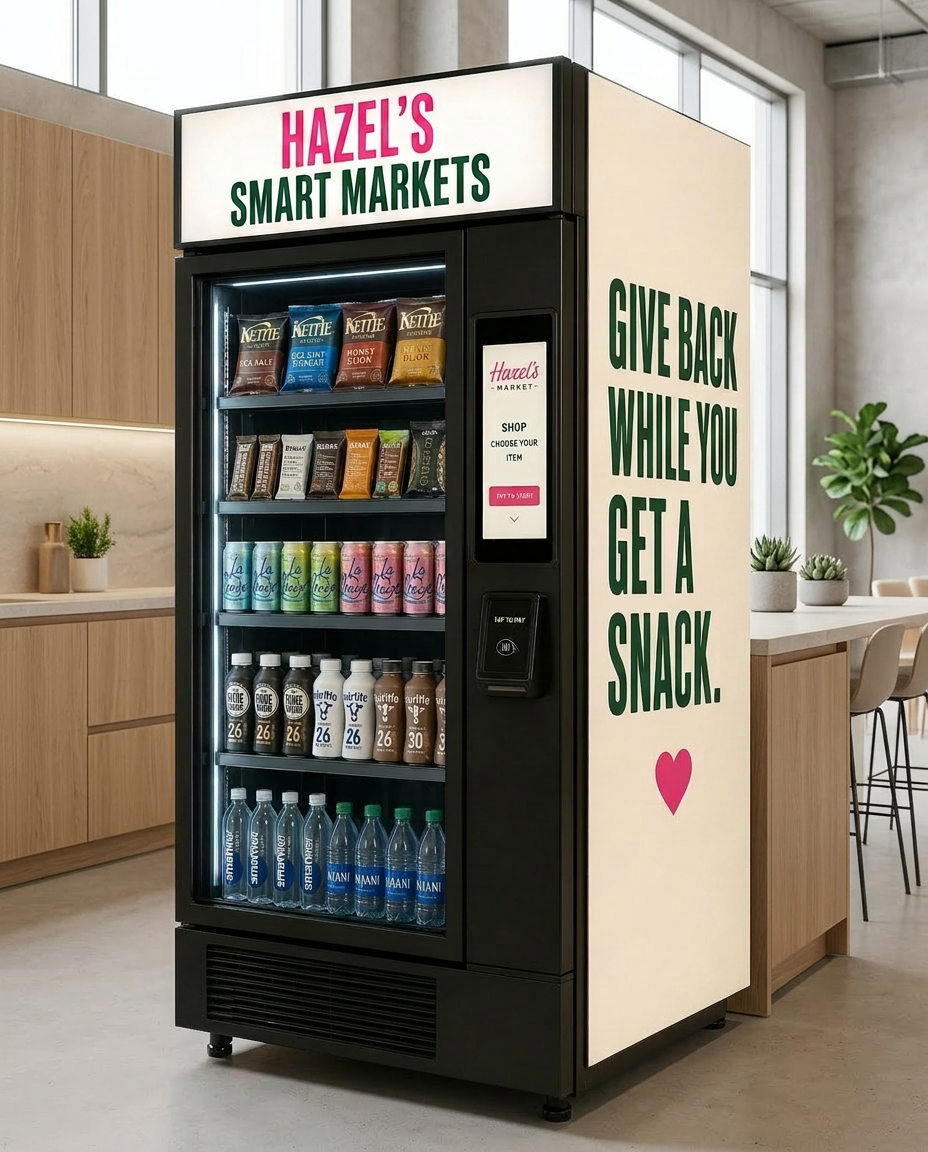
Walk into a Denver office breakroom in 2026 and you can usually tell, within about ten seconds, whether the company has thought about its team's day or not. The coffee station tells one story. The snack situation tells another — and for a lot of growing Front Range businesses, that second story has quietly become a problem.
The old answer was a vending machine in the corner. Maybe two. They were loud, they were clunky, they ate dollar bills, and the inventory was whatever a route driver dropped off three weeks ago. For a long time, that was just *how breakrooms worked*. It is no longer how Denver works.
This guide walks through the realistic alternatives — what they cost, what they require, who they fit, and how to choose between them — written from the operator side rather than the brochure side.
Why offices in Denver are rethinking the vending machine
Denver's office market has changed shape. Hybrid schedules mean Tuesdays, Wednesdays, and Thursdays are dense, and Mondays and Fridays are quieter. Companies are competing for in-office attendance, not just talent. The breakroom has become a small but visible part of that competition.
At the same time, the people working in those offices have raised the bar on what they expect to see in a fridge. Sparkling waters, clean-label snacks, protein options, real food — these are not premium asks anymore. They are baseline.
Old coil vending machines were not built for any of that. They were built for shelf-stable candy and 20-ounce sodas, in a world where exact change was a normal thing to carry.
The pressure points we hear about most
- Employees stop using the machine and start ordering DoorDash for a $4 drink
- Office managers chase down route drivers for refunds and restocks
- Leadership wants a more premium feel without taking on a side project
- Hybrid attendance days create big swings in demand the old hardware cannot handle
The realistic alternatives, ranked by fit
There is no single right answer for every Denver office. The right call depends on headcount, square footage, building rules, and how much the team actually wants to manage.
1. Fully managed smart coolers
A smart cooler is a glass-front refrigerator with a card reader and a locked door. Employees tap a card or phone, the door unlocks, they take what they want, and the door re-locks and charges the right amount automatically. No PIN pads, no selection codes, no coils.
For most small to mid-size Denver offices — roughly 25 to 250 people on a typical day — this is the cleanest fit. It looks like a premium amenity, it fits in the footprint of an old vending machine, and a managed operator handles the merchandising and restocking.
2. Micro-markets
A micro-market is a small unattended store inside the office: open shelving, a beverage cooler, sometimes a freezer, and a self-checkout kiosk. It works beautifully for offices with a dedicated breakroom of about 150 square feet or more and headcounts above roughly 150.
Micro-markets carry far more SKUs than a cooler — fresh meals, pantry items, single-serve coffee, snacks, and drinks all in one space. The tradeoff is space and a slightly higher operational rhythm.
3. Office pantry programs
A pantry program is fully stocked, fully free-to-employee snacks and drinks, billed back to the company on a subscription. Great culture move for venture-backed teams that have decided the breakroom is part of the benefits package. Expensive at scale, and waste is real if the assortment is not curated tightly.
4. Stocked office fridges via grocery delivery
The DIY version: someone on the office manager's team places a weekly Instacart or wholesale order. It works at very small scale. It stops working the moment the office crosses about 30 people, because someone is now doing breakroom logistics as a part-time job.
5. Traditional vending (still, for some cases)
Old-school coil vending still has a niche — 24/7 industrial sites, secure facilities where smart hardware is harder to deploy, or extremely low-traffic satellite spaces. For a normal Denver office, it is rarely the right answer in 2026.
How to choose: a short decision framework
We use a simple version of this with property and office teams across the Front Range:
- Under ~25 daily users → stocked fridge or a single small smart cooler
- 25–150 daily users → managed smart cooler, sometimes paired with a coffee program
- 150–400 daily users → micro-market, often with a smart cooler in a secondary suite
- 400+ daily users or multi-floor → micro-market plus satellite smart coolers per floor
Headcount is only half of it. The other half is *how the office is laid out*. A long floor plate with one breakroom on the far end behaves very differently from a compact suite where the kitchen is central.
What a modern Denver office breakroom actually looks like
Picture a typical 120-person tech office in RiNo or LoDo. The old setup was a single vending machine, a Keurig, and a fridge full of forgotten lunches.
The 2026 version, in the same footprint: a glass-front smart cooler with sparkling waters, cold brew, functional drinks, and grab-and-go meals; a small open-shelf snack section curated to the team's preferences; a better espresso machine; and a cleaner, calmer space around it. Same square footage. Completely different signal.
Realistic assortment for a Denver office cooler
- Sparkling water, electrolyte drinks, cold brew, kombucha, and a few legacy soda options
- Protein bars, jerky, mixed nuts, fruit cups, yogurt parfaits
- Real lunch options two to three days a week — wraps, salads, bento boxes
- A small rotating local section featuring a Colorado brand or two
Comparison: smart cooler vs. micro-market vs. legacy vending
A simple side-by-side, written the way we explain it on walkthroughs:
- **Footprint** — Smart cooler: vending-machine size. Micro-market: a real corner of the breakroom. Legacy vending: vending-machine size.
- **SKU count** — Smart cooler: typically 60–120. Micro-market: 200–400+. Legacy vending: 30–45 and rigid.
- **Payment** — Smart cooler and micro-market: tap, mobile pay, app. Legacy vending: bills, coins, sometimes card.
- **Refund experience** — Smart cooler and micro-market: handled in software, often instant. Legacy vending: phone the number on the front, hope for the best.
- **Look and feel** — Smart cooler: modern fridge. Micro-market: small premium store. Legacy vending: 1990s.
- **Operational lift on the office** — Managed smart cooler or market: near zero. DIY pantry: real. Legacy vending: low but frustrating.
What it actually costs the office
For most Denver offices, a fully managed smart cooler or micro-market from a local operator is *free to host*. The operator owns the hardware, stocks it, services it, and earns its margin on the products sold.
Where companies do spend money is when they want to subsidize. Common patterns we see on the Front Range:
- 100% subsidized (free to employees) — a pantry-style benefit, billed monthly
- Partial subsidy — the company covers $1–2 per item or a flat percentage
- Unsubsidized — employees pay market price, often still cheaper than DoorDash
Each model has a place. The right one usually depends on how the company already thinks about perks.
Local context: choosing an operator that actually shows up
Denver, Boulder, Westminster, Thornton, Centennial, Longmont, Erie, and Lafayette are not the same market. A national vending company routing trucks through Colorado on a fixed schedule does not behave the same as a local operator that lives here.
When we evaluate a location for a Hazel's Smart Markets install, we are looking at things like local restock cadence, the neighborhood's product preferences, and whether the building's loading situation can support a smooth weekly visit. That kind of attention is hard to outsource to a 1-800 number in another state.
Questions to ask any operator before signing
- Where is your nearest service tech based?
- How do refunds work, and how fast are they processed?
- Can you adjust the assortment after 30 and 60 days based on what is selling?
- What does the contract say about removal if it is not working?
- Do you provide reporting we can actually read?
Internal links worth reading next
If you want to go deeper on specific angles, these are useful companion reads:
- Why smart markets are replacing vending across Colorado
- Smart markets and the workplace breakroom experience
- The rise of cashless smart vending in Colorado
Ready to upgrade your Denver office breakroom?
If your team has outgrown the old vending machine — or is opening a new Denver office and wants to start with the right setup — Hazel's Smart Markets can walk the space, recommend the right format, and have a managed smart cooler or micro-market live in a matter of weeks. Request a location on the homepage and we will be in touch.
Frequently Asked Questions
- What is the best vending alternative for a small Denver office?
- For most offices under 150 people, a fully managed smart cooler is the cleanest fit. It uses the same footprint as a vending machine, looks like a modern fridge, accepts tap and mobile pay, and is restocked by the operator.
- How much does a smart cooler or micro-market cost the office?
- In most cases, nothing. The operator owns the hardware and earns its margin on products sold. Companies only spend money when they choose to subsidize part or all of the products as an employee benefit.
- Do micro-markets work for hybrid offices in Denver?
- Yes. The right operator builds the assortment around your busy days — usually Tuesday through Thursday — and adjusts par levels so you are not throwing food away on Mondays and Fridays.
- How fast can a smart cooler be installed?
- For most Denver offices, two to four weeks from the initial walkthrough. The longest variable is usually building approval and electrical access, not the hardware itself.
- What happens if an item is out of stock or charges incorrectly?
- Modern smart coolers and micro-markets handle refunds in software, usually within the same day. There is no chasing a route driver for quarters.
Hazel’s Smart Markets
Bring a smart market to your Colorado space.
We partner with healthcare offices, apartment communities, fitness studios, and modern workplaces across Denver Metro and the Front Range — fully managed, fully cashless, and community-focused by design.
Request a Location