Top Apartment Amenities Residents Actually Use in 2026
A grounded look at the apartment amenities Denver residents actually use in 2026 — and where smart markets and smart coolers fit in the multifamily amenity stack.
Every multifamily team in Denver has, at some point, paid for an amenity that nobody used. The unused yoga lawn. The pet washing station that became a storage closet. The "resident lounge" that turned into the room nobody books because the WiFi is spotty.
The amenity arms race is real, but the actual usage data is usually quieter than the brochure suggests. As we move through 2026, the gap between *what gets advertised on the property tour* and *what residents actually open the app to use* keeps widening.
Here is an honest read on where that gap is sitting right now, drawn from conversations with property managers and asset managers across Denver, Thornton, Westminster, Broomfield, Boulder, Centennial, and Erie.
What residents actually use in 2026
Across Front Range multifamily, the amenities that consistently see real, repeat usage right now are the ones that solve a small daily friction. Not the showpieces.
1. Package and parcel rooms with smart locker access
Online ordering volume is not going down. Properties that invested in a real package solution — full smart locker rooms with notifications, oversize handling, and refrigerated lockers for grocery delivery — see daily usage and direct retention impact.
2. Reliable, fast WiFi in shared spaces
It sounds basic. It is still the single most-used amenity in most buildings, and the most complained about when it lags. Co-working corners with strong WiFi outperform formal business centers in almost every property we walk.
3. Smart markets and smart coolers in the lobby or clubhouse
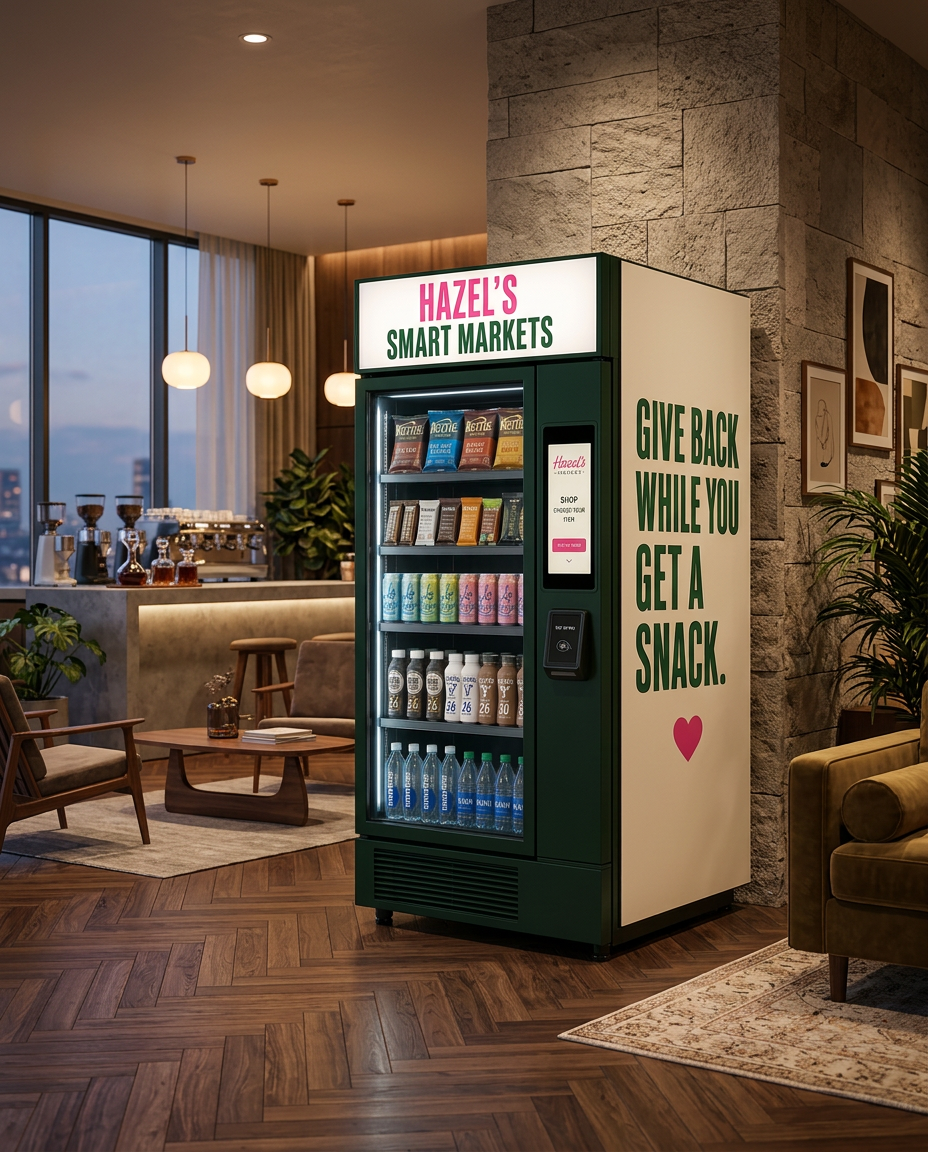
This is the amenity that has changed the most in the last three years. A modern smart cooler in the lobby — tap-to-pay, glass-front, curated assortment — is now in the same conversation as the package room. It is small, it gets used multiple times a week per resident, and it shows on every tour.
4. Updated fitness areas with peloton-style or strength equipment
Not the ten-machine cardio rooms of 2015. Today's residents want a smaller, well-maintained space with a couple of strength racks, a few cardio pieces, and good music or screens.
5. Pet amenities that are actually maintained
Dog runs and pet wash stations work — but only when they are clean. The amenity is the maintenance, not the equipment.
6. Outdoor spaces with shade, seating, and grills that work
Front Range residents use outdoor space heavily three seasons a year. Properties with usable outdoor furniture, real shade, and grills that are not broken see real foot traffic.
What residents do not actually use as much as marketing suggests
It is worth being honest about the other side, too:
- Formal business centers with desktop computers
- Theater rooms with projection equipment that needs setup
- Demonstration kitchens that require booking
- Single-purpose game rooms with one shuffleboard table
- Meditation rooms that share a wall with the gym
These are not bad ideas in principle — they are bad ideas in execution when the friction to use them is higher than the convenience of staying in the unit.
Why smart markets keep moving up the list
When we look at where smart markets and smart coolers fit in the 2026 multifamily amenity stack, three things are driving the move up the list:
1. They reduce a real daily friction
It is 9:14 p.m. on a Wednesday. A resident is out of sparkling water and does not feel like driving to King Soopers. The lobby cooler solves it in 90 seconds.
2. They are visible on every tour
Unlike the WiFi or the package room software, the smart cooler is *physically there* on the tour. Prospects see it. Tour staff use it as part of the walk. It quietly signals "this property is run by people who pay attention."
3. They cost the property nothing to host
A managed smart cooler from a local operator typically costs the property nothing to install or run. The operator owns the hardware, handles restocking, and manages refunds. The amenity adds value without adding line items.
A realistic 2026 amenity stack for a Front Range property
If you were standing up a new lease-up today in Thornton or Westminster, the highest-leverage amenity stack — based on actual usage — looks something like this:
- Smart locker package room with refrigerated lockers
- Reliable shared-space WiFi with co-working corners
- Lobby smart cooler or small clubhouse smart market
- Compact, well-equipped fitness area
- Maintained dog amenities
- Functional outdoor spaces with shade and grills
- One genuinely social space — a clubhouse with comfortable seating and a coffee machine that works
Notice what is not on the list: the showpieces that look great on the marketing site and gather dust by month four.
Comparison: high-usage vs. low-usage amenities
A simple way to evaluate any amenity before you spend on it:
- **High-usage amenities** — solve a daily friction, are visible from common paths, work without staff involvement, and improve when other residents use them.
- **Low-usage amenities** — require booking, require setup, require cleaning between uses, or only solve an occasional problem.
A smart cooler hits every high-usage marker. A formal theater room hits almost every low-usage one.
What property teams should ask a smart market operator
If you are evaluating smart markets for a Denver Metro multifamily property, the questions worth asking are practical:
- What does the assortment look like for our specific resident demographic?
- How quickly are restocks and refunds handled?
- Can we feature local Colorado brands in the cooler?
- What does reporting look like — do we get to see what is selling?
- How does the program adjust at 30, 60, and 90 days?
Internal reading for multifamily teams
- Smart market solutions for apartment communities in Denver
- Smart coolers as a resident amenity that improves retention
- Why smart markets are replacing vending across Colorado
Add the amenity residents will actually use
If you manage or own a Front Range apartment community and want to add a high-usage, zero-cost-to-host amenity, Hazel's Smart Markets installs and operates premium smart coolers and small markets in lobbies and clubhouses across the Denver Metro. Request a location and we will scope your space.
Frequently Asked Questions
- What apartment amenities have the highest actual usage in 2026?
- Smart locker package rooms, reliable shared WiFi, lobby smart coolers and markets, well-maintained fitness areas, pet amenities, and functional outdoor spaces. The pattern is amenities that solve a real daily friction.
- Does a smart cooler in the lobby really improve retention?
- It contributes. It is visible on tours, used multiple times per week per resident, and signals attentive property management. It is not the only retention factor, but it is one of the cheapest to add.
- How much space does a lobby smart cooler need?
- Roughly the footprint of a vending machine — typically 30 to 36 inches wide. Smaller and larger units exist depending on resident traffic and clubhouse layout.
- What does a smart cooler cost the property?
- In a managed model, typically nothing. The operator owns the hardware, restocks, and manages the experience. The amenity adds value without adding line items to the property's budget.
- Can the assortment include local Colorado brands?
- Yes. A good operator will feature local Colorado brands in the cooler, which residents notice and appreciate.
Hazel’s Smart Markets
Bring a smart market to your Colorado space.
We partner with healthcare offices, apartment communities, fitness studios, and modern workplaces across Denver Metro and the Front Range — fully managed, fully cashless, and community-focused by design.
Request a Location