What Property Managers Should Know Before Installing a Smart Market
A practical pre-install guide for property managers — what to evaluate, what to ask, what to require, and what to ignore when adding a smart market or smart cooler to a building.
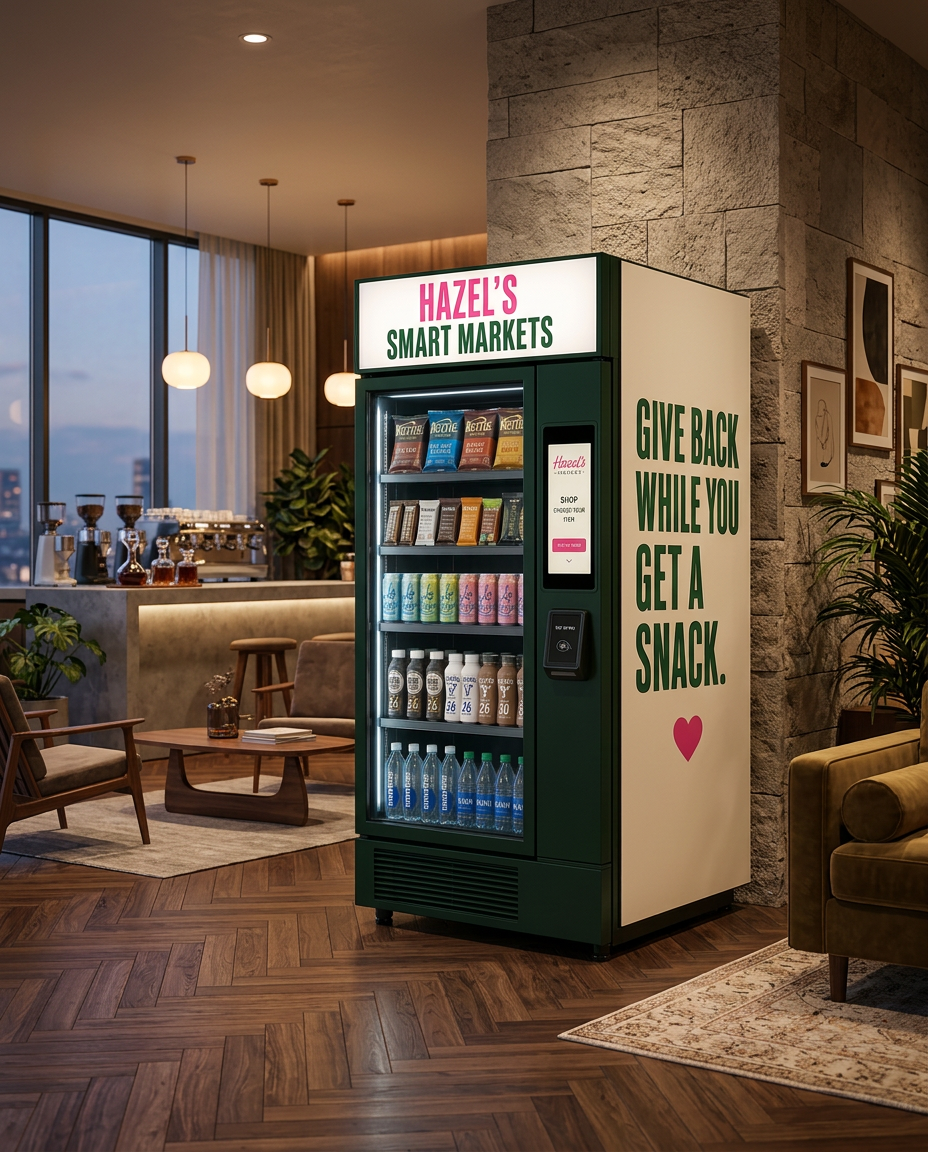
If you are a property manager evaluating a smart market or smart cooler for your building, you are about to make a decision that will be visible to every resident, employee, patient, or member who walks through your space.
This is a checklist version of the conversation we wish more property teams had *before* signing with any operator — what to look at, what to ask, and what to require in writing.
Step 1: Define the actual problem you are solving
Before any operator pitches you, write down the problem in one sentence. The right answer changes depending on which of these is true:
- "Residents are asking for a lobby snack and drink option."
- "Our breakroom looks dated and we are losing the talent comparison."
- "The vending machine we have now is constantly broken."
- "We need 24/7 access for staff and overnight visitors."
- "We want a premium amenity that improves tour conversion."
Each of these points to a slightly different format and assortment. An operator who does not ask which one applies is not the right operator.
Step 2: Evaluate the physical space
Walk the location with the format in mind. Practical things to confirm:
- **Power** — A standard 120V outlet within 6 feet is usually enough for a single smart cooler. Larger micro-markets may need additional circuits.
- **Footprint** — Most smart coolers fit in a vending-machine-size footprint. A small micro-market needs roughly 100 to 200 square feet.
- **Floor surface** — Level, hard flooring is ideal. Carpet is workable but the cooler will need a leveling adjustment.
- **Visibility** — Lobby and breakroom placement should be in line of sight from common paths.
- **Loading and access** — How will restock visits enter the building? Front door? Loading dock? Service elevator?
- **Climate** — Direct sun on glass-front coolers shortens equipment life. Plan placement accordingly.
Step 3: Define your audience and your hours
An operator cannot build a real assortment without knowing who is using the space and when. Be ready to share:
- Total daily users on a typical day
- Peak hours and slow hours
- Demographic notes that matter — families, shift workers, residents, patients, students
- Any allergens or product categories you want to avoid
- Brand alignment notes — for example, a wellness-focused property may want to skip high-sugar drinks
Step 4: Get the contract right
This is where most property teams either over-trust the brochure or over-lawyer the deal. The right middle is a short, clear agreement that covers:
- **Term** — Reasonable length with clean exit language if performance does not meet expectations
- **Service-level expectations** — Restock cadence, refund handling, and response times
- **Equipment ownership** — Who owns the hardware, who insures it, and who is responsible for damage
- **Removal** — Who removes the equipment if the program ends, and on what timeline
- **Reporting** — What data the property gets and how often
- **Subsidy and revenue share** — If applicable, exact terms in writing
Step 5: Validate the operator, not just the offer
It is easy to say yes to whoever sends the prettiest deck. It is harder to validate whether an operator can actually run the program over time. Worth asking:
- Who specifically will service this location, and where are they based?
- How long has the operator been running locations of this type?
- Can you tour an existing similar location?
- How are refunds processed, and what is the typical turnaround?
- What happens during holidays, weekends, and surge demand?
Local matters here. A national vending company routing trucks through Colorado on a fixed schedule does not behave the same as a Front Range operator that lives 20 minutes from your building.
Step 6: Plan the launch
Once you have signed, the launch is a small project. A clean launch usually includes:
- A target install date that avoids your busiest week
- Internal communication to residents, staff, or members two weeks ahead
- Day-one signage explaining how to use the cooler or market
- A walk-through with the operator after 30 days to adjust assortment
- A 60- and 90-day check-in on performance
Step 7: Watch for the right signals after launch
In the first 90 days, the things worth watching are not the headline revenue number — it is whether the program is *working as an amenity*:
- Are users coming back?
- Is the assortment shifting based on what is actually selling?
- Are refund issues handled cleanly?
- Is the cooler clean, stocked, and on-brand every time you walk past it?
If yes to all of those, you have the right setup. If no, you have an operator problem, not a category problem.
Common mistakes to avoid
A few patterns we see often, and the better alternatives:
- Choosing the lowest-cost operator without checking service quality
- Picking a footprint based on what fits, not on what users actually need
- Skipping subsidy decisions until after install (decide during signing)
- Treating the cooler as a one-time install instead of a living program
- Forgetting to update the marketing site and tour script to mention the new amenity
Internal reading worth bookmarking
- Smart market solutions for apartment communities in Denver
- Smart markets and the workplace breakroom experience
- What makes a great smart market operator in Colorado
Ready to evaluate your space?
If you are a Front Range property manager evaluating a smart cooler or smart market install, Hazel's Smart Markets will walk your space, share an honest recommendation, and only move forward if it actually fits. Request a location.
Frequently Asked Questions
- What does a property need to provide for a smart cooler install?
- A standard 120V outlet, a level location with line of sight from common paths, and access for restock visits. Most properties already have everything needed.
- How long does install take?
- From signed agreement to live cooler, typically two to four weeks. The longest variable is usually building approval and electrical access.
- What should be in the contract?
- Term length with clean exit language, service-level expectations, equipment ownership and insurance, removal terms, reporting, and any subsidy or revenue share details.
- Can the cooler be removed if it does not perform?
- With a serious operator, yes. Hazel's Smart Markets uses simple agreements with clean exit terms so properties are never stuck.
- Should the property pay for the equipment?
- In most managed models, no. The operator owns and insures the hardware. The property hosts the location and the operator earns its margin on sales.
Hazel’s Smart Markets
Bring a smart market to your Colorado space.
We partner with healthcare offices, apartment communities, fitness studios, and modern workplaces across Denver Metro and the Front Range — fully managed, fully cashless, and community-focused by design.
Request a Location